
Buy Mobile Home Insurance Online
Find the Cheapest Mobile Home Insurance Online. Compare Fast Free Quotes Right Now!
Compare Quotes in 2 Minutes
Powered by:

 Secured with SHA-256 Encryption
Today it’s easy to buy mobile home insurance online and compare coverage options that may help you save money. The Internet is reshaping the way we buy everything from clothes to insurance. In the past, consumers would call an agency and make an appointment to talk to an agent. This approach to purchasing mobile home insurance often took longer and did not always make it easy to compare several quotes.
With direct home insurers and online comparison tools, consumers can now review coverage options and prices from different sources. Depending on the insurer, state, property, and applicant, they may find a suitable policy at a competitive rate online. Enter your zip code to get started and complete a simple quote application. You can compare available quotes through sites like CitizensInsurance.net in a few minutes. CitizensInsurance.net is an independent insurance information and comparison website, not an insurance carrier or government agency and not affiliated with Citizens Property Insurance Corporation or other similarly named insurers.
Mobile Homes Are Popular in the United States
Manufactured and mobile homes remain an important part of the U.S. housing market. U.S. Census Bureau data show that mobile homes represented about 5.4% of U.S. housing units in 2024, amounting to several million homes nationwide.[1] One of the main benefits is their generally lower purchase cost compared with many site-built homes, along with factory construction and, in some cases, the possibility of relocation before permanent siting.
For many people, traditional housing costs are out of reach. Buying a manufactured or mobile home can be one practical path toward property ownership. Part of the continued demand for these structures comes from their relative affordability. Traditional home prices have risen substantially in recent years, making lower-cost housing options increasingly important.
Real wages have not always kept up with the rising cost of homes. Higher real estate costs for traditional homes are one reason more consumers are considering manufactured homes. Some lower-income buyers in the market for a new home may find that a mobile or manufactured home is among the few ownership options within their budget.
Millions of people in the United States live in manufactured homes, which continue to serve as an important source of lower-cost housing. You can compare mobile home insurance quotes to review available coverage and pricing from participating providers.
Compare Quotes in 2 Minutes
Compare Insurance Quotes and Save!
 Secured with SHA-256 Encryption
What Exactly Is a Mobile Home?
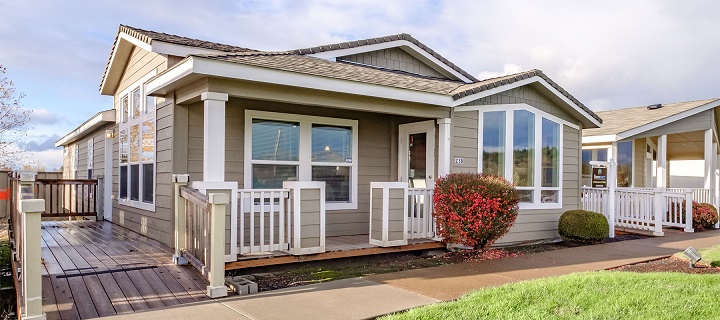
Some people use the terms “mobile” and “manufactured” home interchangeably, but there is a technical distinction. Factory-built homes constructed before June 15, 1976, are generally called mobile homes, while homes built on or after that date to the federal HUD Manufactured Home Construction and Safety Standards are called manufactured homes.[2]
A manufactured home is built in a factory and then transported to the buyer’s site. A modular unit is a bit different. It is often made in sections at a factory and then assembled at the home’s location, much like a traditional house. Modular homes are generally built under applicable state and local building codes rather than the federal manufactured-home standards.
Mobile Homes May Depreciate or Appreciate Over Time
Unlike a site-built home sold together with its land, a mobile or manufactured home may depreciate, remain stable, or appreciate depending on its condition, location, installation, land ownership, and local market. Some finance companies treat manufactured homes titled as personal property more like vehicles when evaluating depreciation and loan terms.
Finance companies may need to factor in possible depreciation instead of assuming the appreciation often associated with a site-built house and its land. There are exceptions, such as manufactured homes in desirable locations or homes sold with valuable land. It can also be more difficult for some consumers to obtain a traditional 30-year mortgage, depending on how the home is titled, whether the borrower owns the land, the home’s age and condition, and the lender’s requirements.
Rates Vary Between Traditional Homes and Manufactured Homes
Mobile home insurance is a little different from coverage for a traditionally built home. Insurance carriers may rate manufactured homes differently because of factors such as construction type, age, installation, replacement cost, location, weather exposure, and claims history. A site-built home and a manufactured home with similar market values may therefore receive different premiums and coverage terms.
Mobile or manufactured homes are usually assembled in a factory, delivered to the lot, and installed according to applicable requirements. These structures are still homes and need to be insured carefully. Let’s look at how to buy mobile home insurance online while comparing coverage limits, deductibles, exclusions, and available rates.
Insurance Limits for Your Mobile Home
For many people, their mobile home will be one of the largest assets they buy in their lifetime, if not their most significant. Manufactured homes in higher-cost areas, especially when sold with owned land, can be worth considerably more than similar homes in lower-cost markets. A solid mobile home insurance plan can help protect that investment against covered losses.
Getting a policy with an appropriate dwelling limit makes financial sense. The amount should generally reflect the estimated cost to repair or replace the home after a covered loss, rather than relying only on its market value or purchase price. Actual cash value and replacement cost coverage can produce very different claim payments because actual cash value accounts for age and depreciation.[3] If a home’s estimated replacement cost is $100,000, that figure may be a useful starting point, but the insurer should calculate the final limit based on the structure, materials, installation, location, and policy terms.
If you live in an area prone to natural disasters such as hurricanes, flooding, or tornadoes, review which events the policy covers and which it excludes. Standard home insurance generally does not cover flood damage, so separate flood insurance may be needed. A lender may require flood insurance when a home is in a Special Flood Hazard Area and has a government-backed mortgage, and some lenders impose broader requirements.[4] You can compare mobile home insurance quotes online and review the available options before choosing a policy.
Compare Quotes in 2 Minutes
Compare Insurance Quotes and Save!
Secured with SHA-256 Encryption
Mobile Home Insurance Costs
Mobile homes can sometimes be relatively expensive to insure compared with the value of the structure. There are several possible reasons for this, including the home’s age, construction, installation, location, wind or storm exposure, fire protection, and claims history. Severe weather events such as tornadoes and hurricanes can cause substantial damage. However, vulnerability varies, and properly installed manufactured homes may use foundations, anchoring systems, and other protections designed for the site and applicable standards.
Pricing depends on several factors, including the property’s age and value, its estimated replacement cost, the deductible amount, coverage type, location, claims history, and available discounts. Mobile home insurance prices vary widely, so an old national price range may not accurately represent what a particular homeowner will pay. Homes in higher-cost or higher-risk areas may cost more to insure than comparable homes in lower-risk markets.
In contrast, a lower-value single-wide unit in a lower-risk rural area may cost less to insure. Remember that the mobile property’s size and replacement cost can also affect insurance prices. Double-wide homes may cost more to cover than single-wide homes when they require higher dwelling limits. You can request a home insurance quote and compare available rates and coverage terms.
Get the Right Manufactured Home Insurance Policy
Just like with any policy, mobile home insurance coverage has several parts, including:
- Liability Insurance – This coverage may help pay covered legal expenses or damages if someone is injured on your property and you are legally responsible, subject to the policy’s terms and limits.
- Dwelling or Property Damage Coverage – This is an essential part of the policy and may cover damage to the home caused by listed or otherwise covered perils. Coverage depends on the policy form and may include events such as fire or wind, while exclusions, deductibles, and special limits still apply.
- Contents Insurance – This coverage can help protect personal property inside the home against covered damage or theft. Flood damage is generally excluded from standard home insurance and may require a separate flood policy. Flood insurance may also be required by a lender in certain high-risk areas.
The most important thing is to choose dwelling and personal property limits that reflect what you need to protect. If the estimated replacement cost of the home is $125,000 and the contents are worth $25,000, discuss separate dwelling and personal property limits with the insurer rather than assuming that one combined $150,000 limit will apply. Coverage limits, valuation methods, deductibles, and exclusions should be confirmed in the policy documents.
How to Get Cheap Mobile Home Insurance Online
There are several ways you may be able to get cheap mobile home insurance. One practical approach is to compare rates online while also considering quotes from agents or other licensed sources. Some insurers may offer different pricing, discounts, or application options online, but the lowest rate depends on the applicant, property, state, and coverage selected.
Here are a few tips that may help you save on mobile home insurance coverage:
- Bundle your manufactured home and auto insurance policies together: This may make policy management easier and may qualify you for a multi-policy discount. The amount varies by insurer and eligibility.
- Consider a higher deductible: A higher deductible can lower the premium, but it also increases the amount you must pay out of pocket after a covered claim.
- Install eligible safety devices such as smoke alarms, carbon monoxide detectors, security systems, or storm-protection features: Some insurers may offer discounts for approved devices or improvements.
- Buy mobile home insurance online after comparing several sources: Direct carriers, licensed agents, and independent comparison tools may each provide useful options. No single channel is always the cheapest, so compare equivalent limits and deductibles.
Many people may find competitive coverage by comparing rates through insurance comparison resources such as CitizensInsurance.net. To start, enter your zip code and review the available online mobile home insurance rates and policy details. A quote request is generally free, but availability, pricing, coverage, and eligibility vary by insurer and state.
References
- U.S. Census Bureau — 2024 American Community Survey, Comparative Housing Characteristics ↩
- U.S. Department of Housing and Urban Development — Manufactured Housing Homeowner Resources ↩
- National Association of Insurance Commissioners — Actual Cash Value and Replacement Cost Coverage ↩
- National Flood Insurance Program — Flood Insurance Eligibility and Lender Requirements ↩
Compare Quotes in 2 Minutes
Secured with SHA-256 Encryption
OUR WEBSITE

TRUST & AUTHORITY


Featured Articles
SEARCH
Looking for something specific? Use the search bar below to find answers to your questions!