
Auto Insurance For Senior Citizens
Find the secrets to affordable senior citizens auto insurance. Expert tips and tricks to save you money. Get your free quote today!
Compare Quotes in 2 Minutes
Powered by:

 Secured with SHA-256 Encryption
Auto insurance for senior citizens can help older drivers stay protected while managing costs. As driving habits, health needs, and mileage change with age, seniors should review their coverage regularly to make sure their policy still fits their lifestyle and budget.
In this CitizensInsurance.net guide to auto insurance for senior citizens, you’ll learn what affects senior car insurance rates, which coverage options are worth considering, what discounts may be available, and how to compare policies before choosing a plan.
CitizensInsurance.net is an independent insurance information website. Coverage options, discounts, eligibility, and rates vary by insurer, state, driver profile, and policy terms.
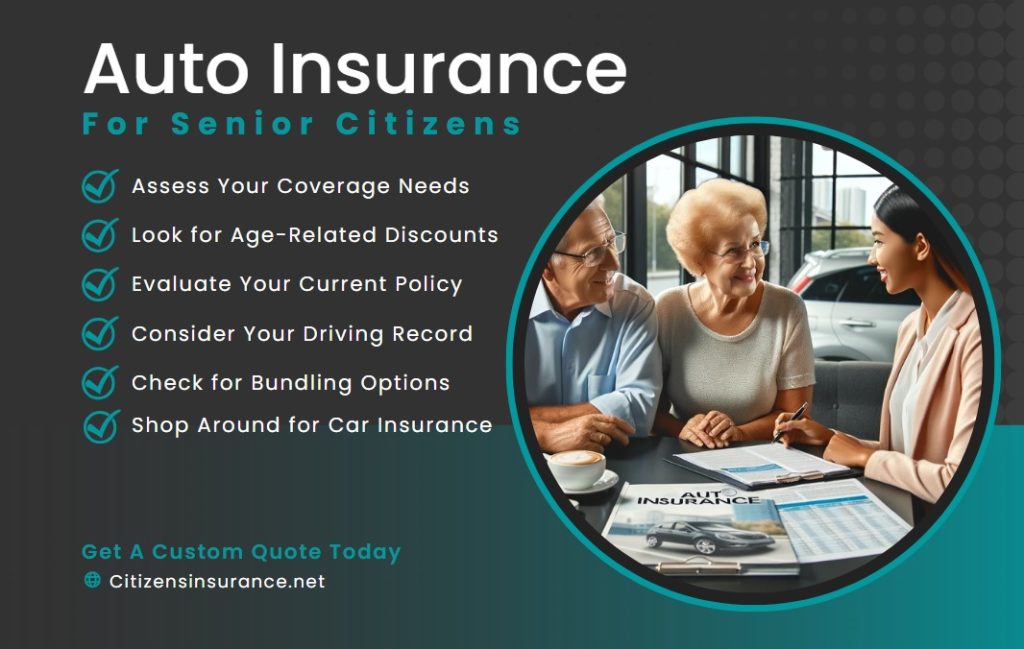
- Senior drivers have many choices for car insurance, including full coverage options for accidents, theft, or weather-related damage, and liability coverage if they cause injuries or property damage to others.
- The cost of car insurance can vary with age, vehicle type, location, mileage, driving record, and coverage limits. Certain health or driving-related changes may affect risk, but safe driving courses can sometimes lead to discounts.
- Certain insurers may offer plans, programs, or discounts for seniors, particularly drivers over 50 or drivers who use their vehicle less often.
- If you are getting older, there may be insurance options worth comparing. Some insurers may provide lower prices for eligible drivers over 50, retired drivers, or drivers who no longer commute daily.
Factors Affecting Auto Insurance Rates for Seniors
Certain factors affecting auto insurance rates can have a more noticeable impact on senior citizens compared to some other age groups. Decisions about driving ability should not be based on age alone, but age-related changes in vision, physical fitness, and reflexes can affect driving safety and how insurers evaluate risk. [1] These factors include:
- Age-Related Physical Changes: Seniors may experience changes in vision, hearing, and reaction time, which insurers might consider when assessing the risk of accidents. This factor can become more significant as drivers enter their late 70s and beyond.
- Driving Record and Experience: While a long history of safe driving can benefit seniors, recent accidents or violations can affect their insurance rates, as they may be viewed as indicators of changing driving risk.
- Health Conditions: Health issues more common in older adults, such as arthritis, weakened vision, or cognitive impairments, may influence how insurance companies assess risk when those conditions affect driving ability.
- Vehicle Choice: Seniors may prefer different types of vehicles compared to younger drivers. The safety features, size, repair costs, and model of the vehicle can affect insurance rates.
- Mileage: Seniors often drive fewer miles, especially if they are retired and not commuting daily. This reduced mileage may lead to lower rates or low-mileage discounts, depending on the insurer and policy.
- Credit History: Where state law allows credit-based insurance scoring, seniors may benefit from a long and stable credit history. However, any recent negative changes in credit status may still affect rates, depending on the insurer and state rules.
These factors highlight the importance for senior drivers to regularly review their auto insurance policies and discuss any changes in their driving patterns, health status, or vehicle use with their insurance providers. This helps ensure that they receive coverage that accurately reflects their current risk profile and driving habits, potentially leading to more suitable insurance rates.
Getting the Best Auto Insurance for Senior Citizens
As senior citizens enter a distinct phase of their lives, it’s crucial to reassess their auto insurance needs to ensure appropriate coverage and possible financial savings. Insurance companies may consider certain senior drivers higher risk when age-related factors affect driving abilities. However, many seniors may qualify for discounts and tailored policy options. With the right approach, senior citizens can secure auto insurance that not only fits their budget but also provides the necessary protection on the road.
Explore the intricacies of auto insurance for seniors, including different coverage options, factors influencing rates, and tips for securing the best policy.
Coverage Options for Senior Drivers
When it comes to auto coverage options for senior drivers, it’s important to consider several key factors that cater to their specific needs. Here’s an overview of some options:
- Higher Liability Coverage: As reaction times can slow with age, it may be wise for some senior drivers to carry higher liability coverage to help protect against the financial consequences of an at-fault accident.
- Accident Forgiveness: This is an add-on in some policies that may prevent or limit a rate increase after a first qualifying accident. It can be especially beneficial for seniors who have maintained a good driving record, although availability and rules vary by insurer.
- Roadside Assistance: This service, often available as an add-on, can be invaluable for senior drivers, providing peace of mind in case of a vehicle breakdown or other roadside emergencies.
- Full Coverage: Full coverage usually refers to a policy that includes liability coverage plus collision and comprehensive coverage. Collision may help pay for vehicle damage after a covered crash, while comprehensive may help cover non-collision damage such as theft, vandalism, fire, or weather-related loss. It can be particularly useful if the senior driver’s car is newer, financed, leased, or has a higher value.
- Medical Payments Coverage: This coverage can help with medical expenses resulting from a car accident, regardless of who’s at fault, where it is available. It can be particularly important for seniors, who may have more significant medical needs after an accident.
When selecting auto coverage, senior drivers should consider their individual needs, driving habits, and budget. It’s also recommended to review and compare different insurance policies and discounts regularly to make sure the coverage and price still fit their situation. [2]
Compare Quotes in 2 Minutes
Compare Insurance Quotes and Save!
 Secured with SHA-256 Encryption
Auto Insurance Discounts for Senior Citizens
Auto insurance discounts for senior citizens can provide meaningful savings on insurance premiums when the driver qualifies. Here are some common types of discounts that senior drivers should consider:
- Discounts for Low Mileage: Many insurance companies offer discounts to drivers who drive below a certain number of miles annually. This can be beneficial for seniors who may not be commuting regularly.
- Defensive Driving Course Discounts: Completing an approved defensive driving course can often lead to discounts on auto insurance. These courses can also be a great refresher for senior drivers. [3]
- Pay-Per-Mile Insurance: For seniors who drive very infrequently, pay-per-mile insurance can be a cost-effective option when available. This type of insurance bases part of the premium on the number of miles driven.
- Good Driving Record Discounts: Seniors with a history of safe driving, meaning no accidents or traffic violations for a certain period, may qualify for discounts.
- Vehicle Safety Features Discount: Seniors driving vehicles equipped with safety features like anti-lock brakes, airbags, anti-theft systems, or newer driver-assistance features may qualify for additional discounts, depending on the insurer.
- Telematics-Based Insurance: This uses a device or mobile app to monitor driving habits. Safe driving can lead to lower premiums, which can be an advantage for seniors with cautious driving habits.
- Multi-Vehicle Discounts: Insuring more than one vehicle with the same insurance company can lead to discounts, which is beneficial for households with multiple cars.
- Bundling Policies: Combining auto insurance with other policies like renters or homeowners insurance can lead to overall lower premiums.
It’s important for senior citizens to ask about these discounts and review their policies regularly to make sure they are getting the best possible rates for their current situation.
Tips for Finding Cheap Auto Insurance for Senior Citizens
Several insurance companies, including large national and regional carriers such as USAA, Geico, Auto-Owners, and Westfield, are often compared by shoppers looking for competitive rates, senior driver discounts, and low-cost auto insurance options. Actual pricing depends on the driver, vehicle, state, coverage limits, and eligibility.
Finding the best auto insurance for senior citizens involves considering several key factors to ensure they get the coverage that suits their specific needs. Here are some tips to help in this process:
- Assess Your Coverage Needs: Senior citizens often have different driving habits than younger drivers. It’s important to assess how much you drive, and what type of vehicle you have to determine the right amount of coverage.
- Look for Age-Related Discounts: Many insurance companies offer discounts to senior drivers. These can include lower rates for drivers over a certain age, discounts for completing approved defensive driving courses, or reduced premiums for driving fewer miles.
- Evaluate Your Current Policy: As circumstances change, so do insurance needs. Review your current policy to see if it still fits. If there are coverages that are no longer necessary, consider dropping them to lower your premium, as long as you still meet state requirements, lender requirements, and your own financial protection needs.
- Consider Your Driving Record: A clean driving record can lead to lower insurance rates. If there have been recent infractions, it may be worth comparing quotes again after they are no longer rated by insurers, depending on your state and carrier.
- Check for Bundling Options: If you have other types of insurance, like home or renters insurance, see if you can bundle them with your auto insurance for a discount.
- Consider Telematics Programs: Some insurers offer programs that monitor driving habits and may offer discounts based on safe driving. Seniors should review privacy terms and program rules before enrolling.
- Read Reviews and Ratings: Look at customer reviews, complaint records, and ratings of insurance providers. This can give you an idea of their customer service and claims handling.
- Shop Around: Don’t settle for the first quote you receive. Compare prices and coverage options from multiple insurance companies to find the best deal.
Compare Quotes in 2 Minutes
Compare Insurance Quotes and Save!
Secured with SHA-256 Encryption
Remember, the cheapest option is not always the best. It’s crucial to balance cost with the level of coverage and service you need.
Senior-Friendly Car Insurance Companies
Several insurance companies are known for offering strong coverage options, competitive pricing, and valuable discounts for senior drivers. Each insurer provides different benefits depending on driving habits, coverage needs, state availability, and budget.
- Geico: Known for competitive rates in many markets, Geico is often compared by seniors seeking economical car insurance. It is appreciated by many shoppers for online tools, broad availability, and discount options, although premiums vary by driver.
- USAA: Especially relevant for eligible veterans, military members, and qualifying family members, USAA car insurance is often commended for customer service and competitive pricing. Eligibility is limited, and actual rates depend on the applicant and coverage selected.
- Esurance: Esurance has been known for user-friendly online tools and digital policy management. Seniors who prefer online quoting and account access may still want to compare similar digital-focused options available in their state.
- AAA: AAA-affiliated insurance programs may be worth comparing for senior drivers who value roadside assistance, local club benefits, and member-related services. Availability, underwriting company, and rates vary by AAA club and state.
- State Farm: State Farm is widely recognized for its broad agent network, coverage options, and customer support. It may be a good comparison option for seniors who prefer working with a local agent.
Each of these companies provides different benefits and pricing structures, making them possible options for senior drivers depending on their specific needs and preferences. This list should be used as a starting point for comparison, not as a guaranteed ranking or endorsement.
Special Considerations for Senior Citizens
- Mature Driver Courses and Discounts: Senior driver courses, often known as defensive driving or mature driver improvement programs, are helpful in catering to the unique needs of older drivers. They update seniors on evolving traffic laws and vehicle technologies, help refine driving skills, and increase awareness of age-related changes in vision, hearing, and reaction time. Additionally, completing approved courses often leads to discounts on car insurance, providing a financial incentive for seniors to maintain their driving competence.
- Health Conditions and Auto Insurance: Health issues can impact auto insurance rates for older drivers when they affect driving ability. Conditions that affect vision, mobility, or reaction time may lead insurers to evaluate risk differently. Medications that alter driving skills can also matter from a safety perspective. However, insurance companies may offer discounts for seniors with vehicles equipped with extra safety features. Seniors with health issues should ask their doctor about driving safety and ask their insurer about available coverage or discount options.
- Modifications for Accessibility: Seniors with disabilities may need adaptive equipment in their cars, such as hand controls, larger mirrors, pedal adjustments, or other modifications, to drive safely. It’s important to inform insurance companies about these modifications and any health conditions that affect driving to ensure appropriate coverage. Vehicle adaptations can help some drivers remain safe and independent when the equipment is properly selected and installed. [4]
Government Programs and Benefits for Senior Drivers
Navigating the world of driving as a senior citizen can be challenging, and various government programs, public agencies, and benefit programs may help seniors plan their overall transportation budget. For example, Social Security retirement benefits can be part of a senior’s household income, which may help with general costs such as vehicle maintenance and insurance. However, Social Security is not an auto insurance discount program. Medicare may help eligible seniors with covered medical care, but it should not be treated as a direct auto insurance benefit.
The Department of Motor Vehicles, depending on the state, may have rules or resources tailored for senior drivers. These may include refresher driving resources, vision tests, renewal rules, or evaluations to help determine whether seniors are still safe to drive. It’s also worth noting that some states offer discounted rates for senior drivers or require insurers to recognize approved driver improvement courses, making it important to check state-specific rules.
State-Specific Regulations for Senior Drivers
It’s important for senior drivers to be aware of the regulations that vary from state to state. Some states may require more frequent license renewals for seniors, or mandate that renewals be done in person rather than online or by mail. This is often to ensure that vision tests and other health checks can be conducted, helping to maintain road safety.
Some states have also implemented rules where physicians may be required or permitted to report medical conditions that could impair a senior’s driving ability. These regulations are in place to balance the freedom of driving with the safety of the driver and others on the road.
Senior drivers should check with their state’s DMV for the most current information on laws and regulations affecting them.
How to Compare Auto Insurance Quotes for Seniors
Comparing free car insurance quotes is one of the best ways for senior drivers to find affordable coverage without sacrificing protection. Insurance companies evaluate risk differently, which means rates and available discounts can vary significantly from one provider to another.
When comparing policies, seniors should look beyond the monthly premium and review what each quote actually includes. A cheaper policy may offer lower liability limits or fewer benefits, while a slightly higher premium could provide better financial protection and additional features like roadside assistance or accident forgiveness.
- Review coverage limits: Make sure liability, collision, and comprehensive coverage amounts are similar when comparing quotes.
- Ask about senior discounts: Many insurers offer savings for defensive driving courses, low annual mileage, retirement status, or vehicle safety features.
- Check deductibles: Higher deductibles usually lower premiums, but they also increase out-of-pocket costs after an accident. Make sure the deductible is affordable if a claim happens. [2]
- Compare customer service ratings: Claims handling and support quality are especially important for older drivers.
- Look for bundled savings: Combining auto and home insurance may reduce overall insurance costs.
- Evaluate optional protections: Features like roadside assistance, rental reimbursement, and medical payments coverage can provide additional peace of mind.
Senior drivers should review quotes at least once a year or after major life changes such as retirement, moving, or purchasing a new vehicle. Comparing multiple offers can help seniors find the right balance between affordability, coverage, and customer support.
FAQs About Auto Insurance for Senior Citizens
What is Senior Citizens Auto Insurance?
Senior Citizens Auto Insurance refers to vehicle insurance policies designed to meet the needs of senior drivers, typically those aged 65 and older. This type of insurance often considers the unique driving patterns and risks associated with older drivers. It may offer specific benefits like discounts for low mileage, retirement status, or completion of approved defensive driving courses.
What happens to my auto insurance rates as I age?
Age can impact auto insurance rates for seniors, but age alone does not determine whether someone is a safe driver. Many drivers in their mid-sixties may still benefit from extensive driving experience and safe records. However, as drivers reach their late seventies and beyond, rates may increase for some people due to risk factors associated with aging, such as slower reflexes, vision changes, or medical conditions that affect driving.
What discounts are available for senior drivers?
Senior drivers can access several discounts to reduce their auto insurance costs when they qualify. These include discounts for maintaining a good driving record, completing approved defensive driving courses, and driving fewer miles annually. Some insurers also offer discounts for seniors who use vehicles with advanced safety features or for those who are retired.
Are there any senior-specific auto insurance policies?
Yes, some insurers offer policies, programs, or discounts designed with senior drivers in mind. These may include savings for low mileage, defensive driving courses, safe driving records, or vehicles with advanced safety features.
These policies may also include helpful options such as higher liability limits, roadside assistance, accident forgiveness, medical payments coverage, and protection against uninsured or underinsured drivers. Senior drivers should compare quotes and ask each insurer which discounts are available based on age, driving habits, vehicle use, and state eligibility rules.
How Can I Save Money on Auto Insurance as a Senior?
Seniors can improve their chances of receiving competitive instant insurance rates by comparing quotes from multiple insurers, maintaining a clean driving record, and updating their policy to reflect their current driving habits, such as reduced mileage. It’s also beneficial to inquire about any additional discounts for which they may be eligible.
References
- National Highway Traffic Safety Administration. “Older Drivers.” https://www.nhtsa.gov/road-safety/older-drivers ↩
- National Association of Insurance Commissioners. “Tips for Saving on Your Auto Insurance.” https://content.naic.org/article/consumer-insight-tips-saving-your-auto-insurance ↩
- AARP Driver Safety. “Online Defensive Driving Course From AARP Driver Safety.” https://www.aarpdriversafety.org/ ↩
- National Highway Traffic Safety Administration. “Adapted Vehicles.” https://www.nhtsa.gov/vehicle-safety/adapted-vehicles ↩
Compare Quotes in 2 Minutes
Secured with SHA-256 Encryption
OUR WEBSITE

TRUST & AUTHORITY


Featured Articles
SEARCH
Looking for something specific? Use the search bar below to find answers to your questions!